

Not Every Harvest Becomes Dinner
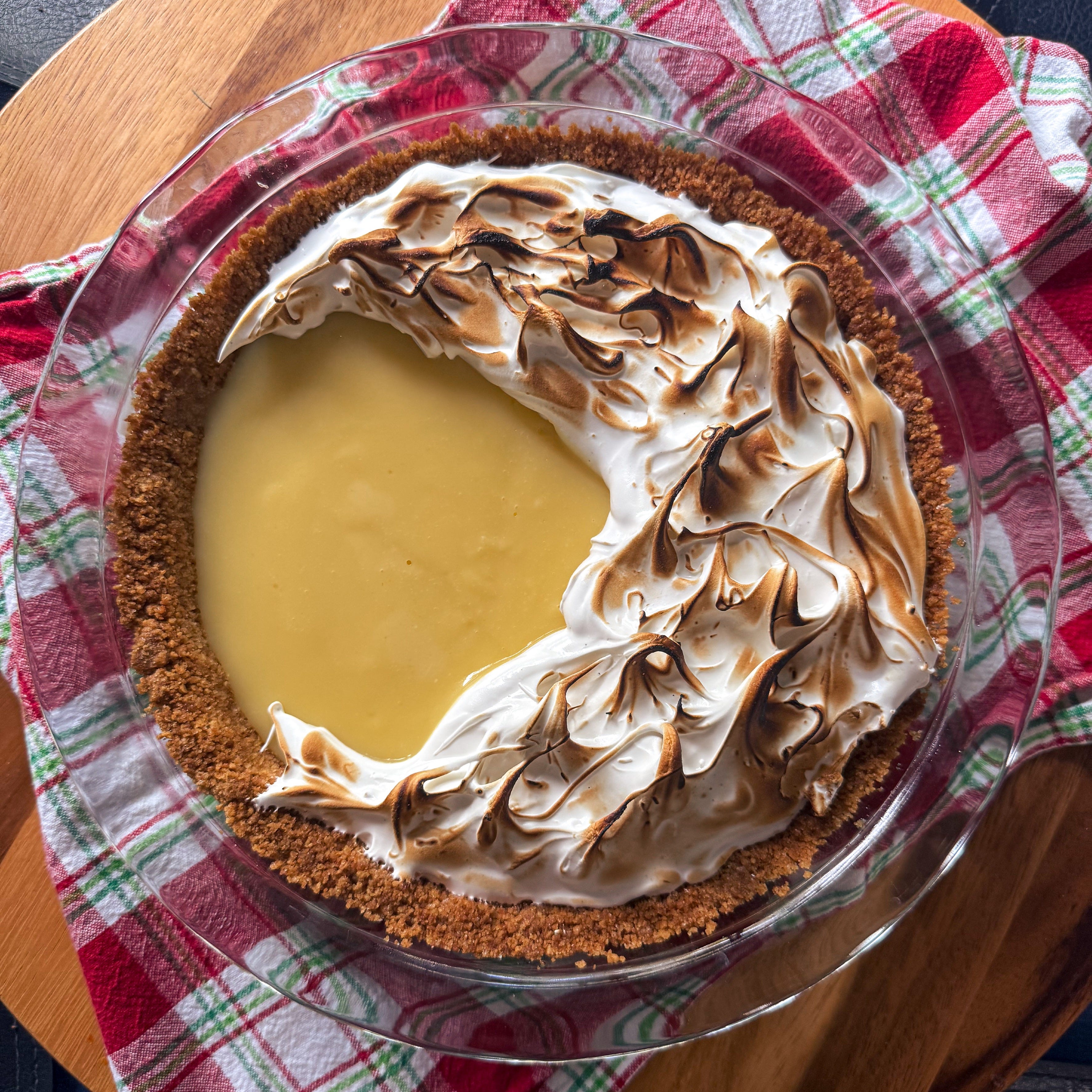
This one became an elderflower lemon meringue pie.

-A recipe from Living Plot.
I don’t usually know what I’m going to make when I step into the garden.
Sometimes I’m looking for dinner. Sometimes tea. Sometimes a handful of flowers for the desk in my office.
I’ve realized that some of my favorite recipes don’t begin at the grocery store.
They begin outside.
They begin with wandering.
With brushing rosemary as you walk by.
With noticing the basil needs a little trim to reach her full potential.
With wondering if a couple little bay leaves could become dessert.
Maybe that’s why I wanted to start sharing a few recipes here.
Not because I think they’re perfect.
But because I hope they encourage someone else to step outside and ask,
“What could I make from what’s growing today?” Even if it’s not a complete meal. Plus it doesn’t hurt to add a little protection and abundance to your nightly dessert.
This evening, I found myself reaching for bay leaves.
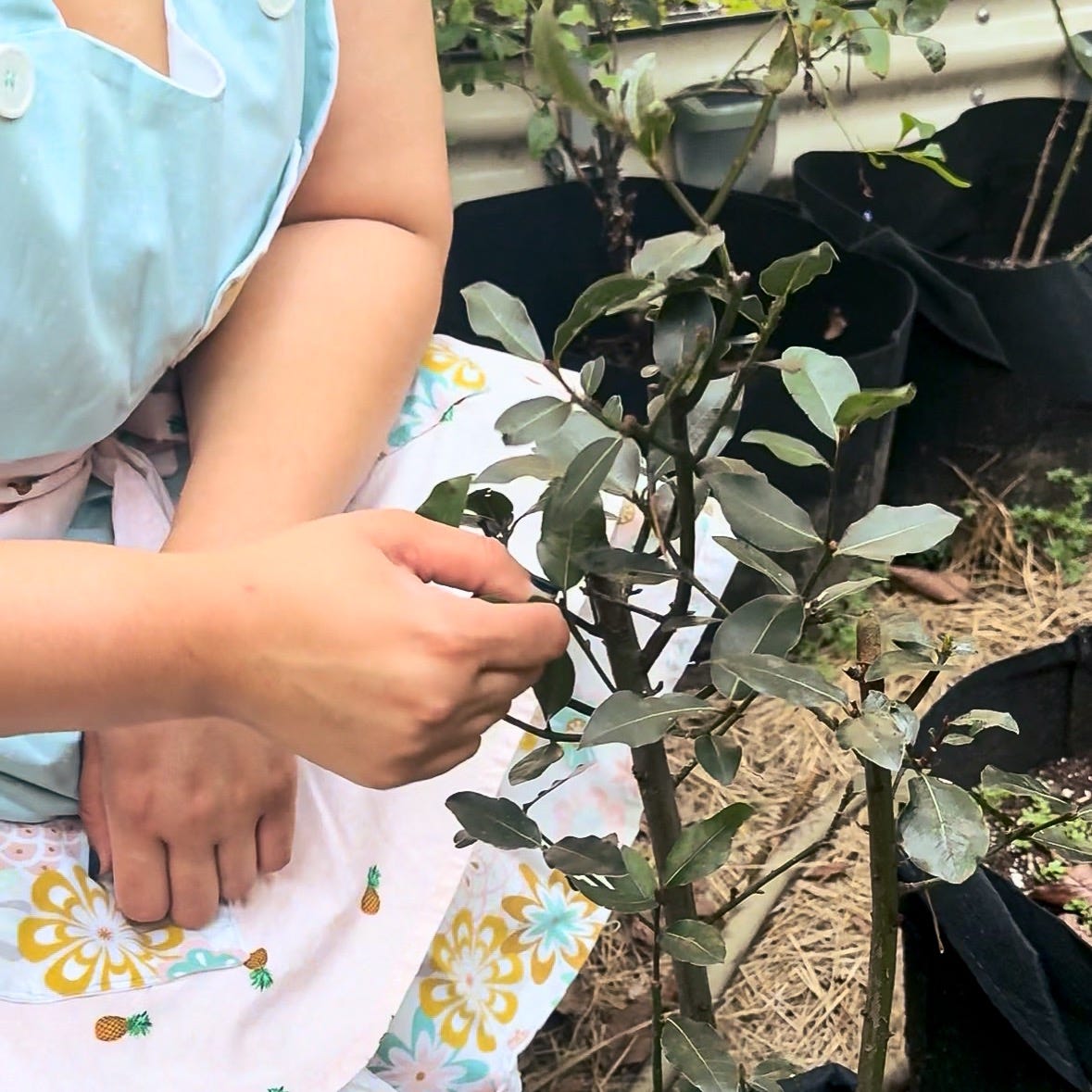
Fresh bay is gentler than its dried counterpart, and I almost always prefer to use them this way. Rub one between your fingers and it smells less like the spice cabinet and more like warm woods after the rain. Besides, my West Indian heritage almost demands that I put a bay leaf in everything. I don’t make the rules, the ancestors do.
And, nearby, the basil was ready too, in all her glory, full and magnificent,still carrying the sweetness of the summer morning, almost insisting I bring her along too.
Neither seemed destined for dessert...
Most people would probably stop there.
Because bay belongs in soup.
Basil belongs with tomatoes.
And Pie…pie belongs to lemons.
But I’ve always liked asking ingredients questions they weren’t expecting.
What if fresh bay could soften the sharp edges of citrus?
What if basil didn’t need to announce itself to be noticed?
Of course, there was only one way to find out.
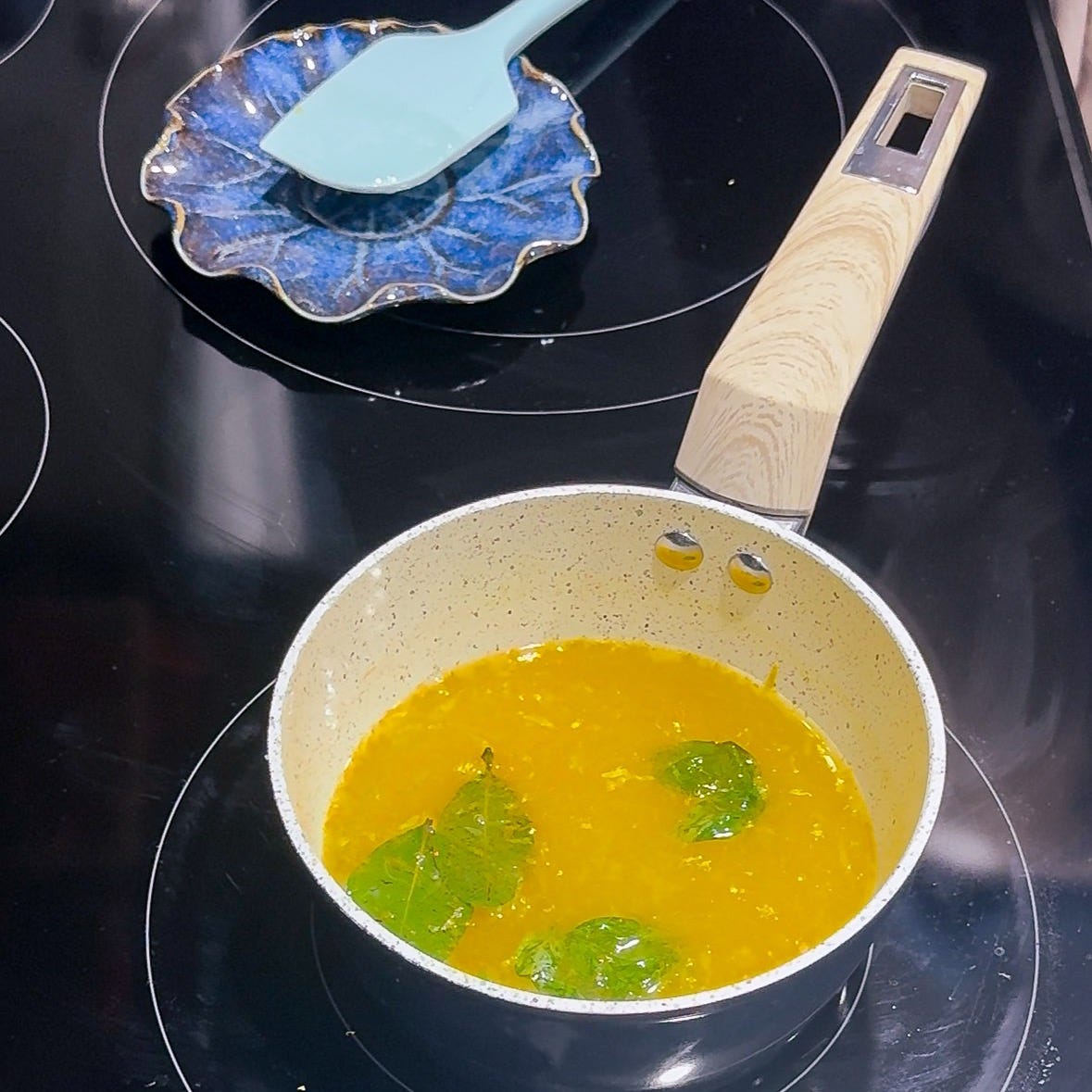
The herbs steeped with Meyer lemon juice until the whole kitchen smelled like fresh citrus before a splash of St. Germaine, my favorite elderflower liqueur, found its way into the curd.
The result wasn’t a pie that tasted like herbs. It tasted brighter…
Softer.
The lemon felt rounder somehow, while the elderflower quietly tied everything together in a whisper.
A graham cracker crust with just a little Biscoff gave the pie warmth without overpowering it.
And instead of covering the top completely, I spread the Swiss meringue into a crescent moon before giving it a quick toast.
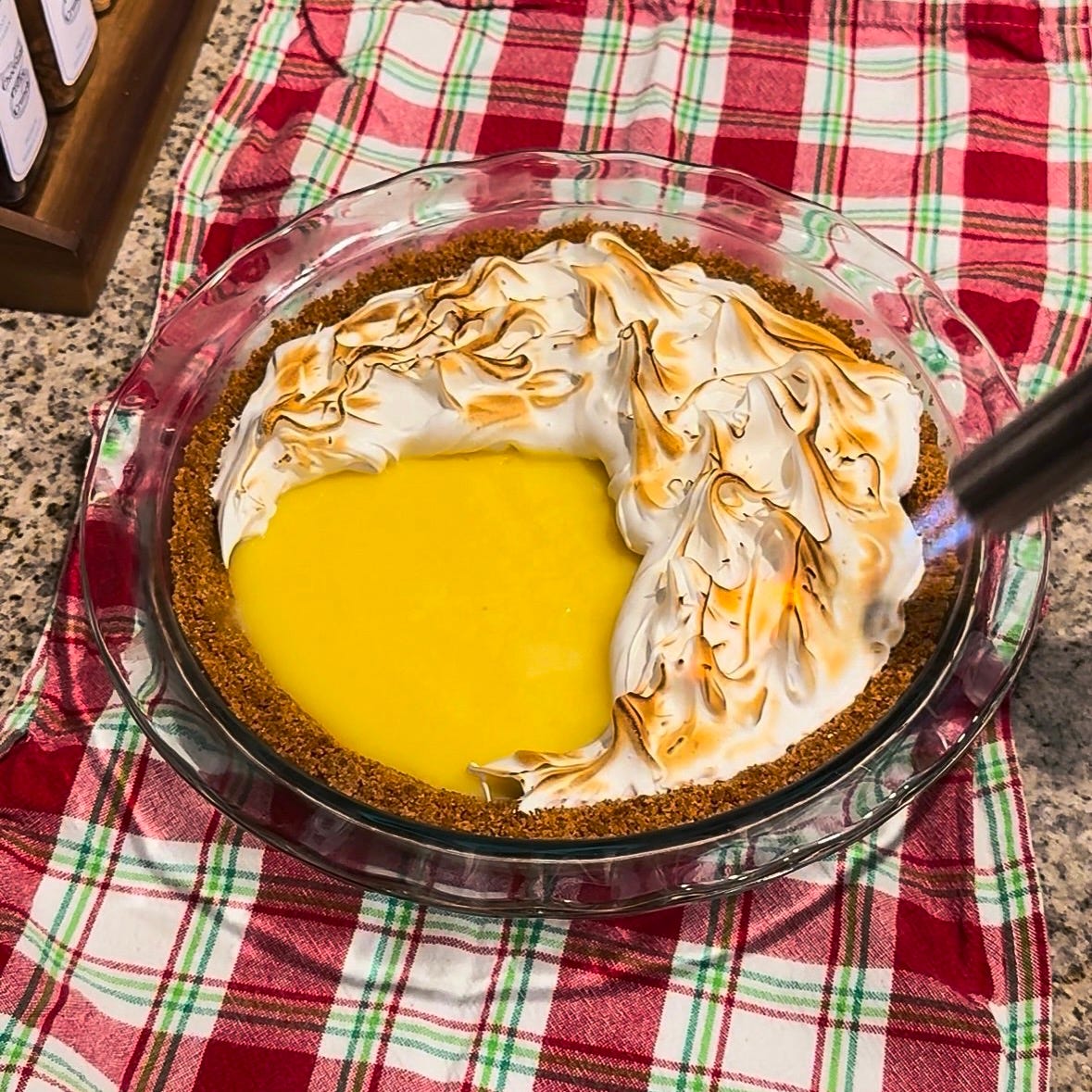
There wasn’t a practical reason for it. I mean, who doesn’t love loads of meringue..
But it just felt like the pie wanted one.
And honestly? Sometimes that’s enough.
By the time I was done, Pluto wandered in to inspect my work, as he always does, while I stood there debating whether one more pass with the torch would ruin the moon.
It didn’t.
And, I think he approved.
Not every decision in the kitchen has to be justified. Some are simply made because they make you smile when you cut yourself a slice.
Maybe that’s what I love most about cooking from the garden. It encourages curiosity more than perfection. A handful of herbs becomes dessert. A pie becomes something a little whimsical. And an ordinary evening becomes memorable simply because you decided to ask, What if?
I think gardens are good at teaching us that not every beautiful thing grows where we expect it to.
And sometimes...
Neither do recipes.
So, if you’d like to bake a little curiosity of your own... here’s how I made it.
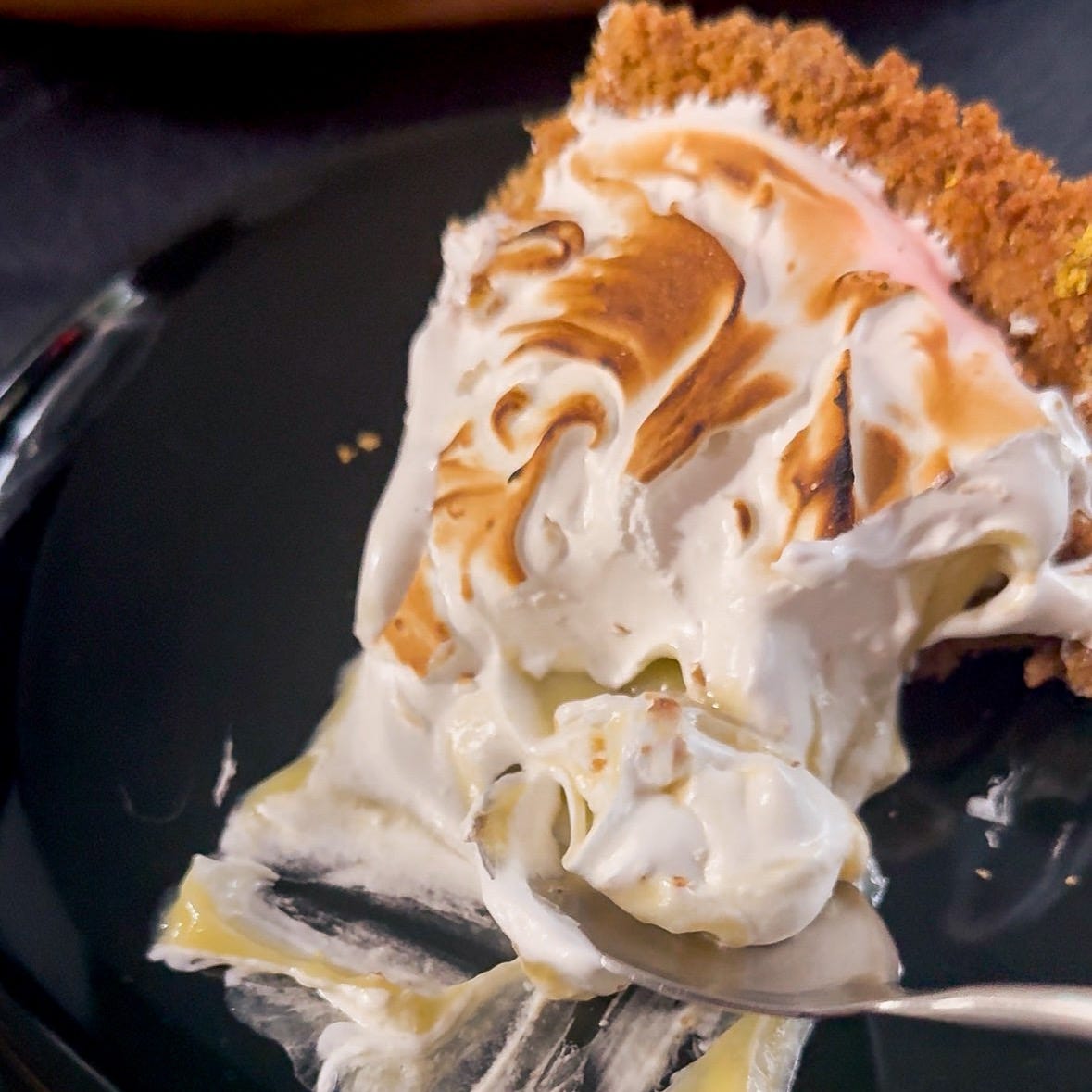
🌙 Elderflower Lemon Meringue Pie
A Meyer lemon pie infused with fresh bay leaves, basil, and elderflower liqueur, nestled in a graham cracker and Biscoff crust beneath a toasted crescent moon of Swiss meringue.
Makes: One 9-inch pie
The Crust
Ingredients:
9 to 10 graham cracker sheets, finely crushed (about 1⅓ cups)
6 Biscoff cookies, finely crushed (about ⅓ cup)
2 tablespoons granulated sugar
Zest of 1 Meyer lemon
½ teaspoon salt, I used Celtic
6 tablespoons unsalted butter, melted
Not so optional, but optional: ½ teaspoon vanilla extract and ¼ teaspoon cinnamon powder, and a couple grates of nutmeg
Method:
Preheat the oven to 350°F (175°C).
Rub the lemon zest into the sugar until fragrant.
Stir together the graham cracker crumbs, Biscoff crumbs, sugar, salt, melted butter, and not so optional seasonings, until evenly moistened.
Press firmly into the bottom and sides of a 9-inch tart pan or pie plate.
Bake for 16 minutes, or until lightly golden and fragrant.
Let cool completely before filling.
The Meyer Lemon Filling
Ingredients:
¾ cup Meyer lemon juice (4 to 5 lemons)
Zest of 2 Meyer lemons
¾ cup granulated sugar
2 fresh bay leaves
4 to 5 fresh basil leaves, gently bruised
4 large eggs
2 egg yolks
½ cup unsalted butter, cubed
1 tablespoon St-Germain elderflower liqueur
1 teaspoon or so of vanilla extract
Pinch of salt
Method:
Combine the lemon juice, zest, sugar, and bay leaf in a saucepan over medium-low heat until the sugar dissolves.
Add the basil and steep for 2 to 3 minutes.
Remove and discard the herbs.
Whisk together the eggs and yolks.
Slowly temper the eggs with the warm lemon mixture.
Return everything to the saucepan and cook over low heat, stirring constantly, until thick enough to coat the back of a spoon.
Remove from the heat and whisk in the butter and salt until silky.
Cool for about 5 minutes, then stir in the St-Germain, and vanilla extract.
Pour into the cooled crust and chill for at least 4 hours, preferably overnight.
Toasted Swiss Meringue
Ingredients:
4 large egg whites
1 cup granulated sugar
Pinch of salt
1 tablespoon vanilla bean paste
1 tablespoom St-Germain elderflower liqueur
Method:
Combine the egg whites, sugar, and salt in a heatproof bowl.
Set over simmering water, whisking constantly until the mixture reaches 160°F (71°C) and the sugar has completely dissolved.
Transfer to the bowl of a stand mixer.
Beat until glossy, stiff peaks form and the bowl feels cool.
Mix in the vanilla bean paste and St-Germain.
Spoon or pipe onto the chilled pie.
Shape into a crescent moon and toast with a kitchen torch until golden.
Notes from the Plot:
Fresh bay is much more delicate than dried. If using dried bay, steep for just a minute or two.
Meyer lemons make this pie softer and slightly floral. If using regular lemons, add an extra tablespoon of sugar to balance the tartness.
The St-Germain should be a whisper, not a headline. It should leave people wondering why the pie tastes so impossibly round and fragrant.
See you in the garden,
-Mint